
Case study: streetwear & sneakers, Poland
A multi-brand streetwear store whose earlier ads lost money. Kliks took High Kiosk from ads returning 0.4x to a 4.7x blended ROAS across Google and Meta, peaking at 7.3x in September, with paid revenue up 284% and cost per purchase down 77%.
- 7.3xPeak ROASSeptember 2026, Google + Meta
- 4.7xBlended ROASMay–Sep 2026, up from 0.4x
- −77%Cost per purchaseVersus the brand’s earlier ads
- +284%Paid revenue growthMay to September 2026
- 6+Months and ongoingSince May 2026
The challenge
Hype products. Loss-making ads.
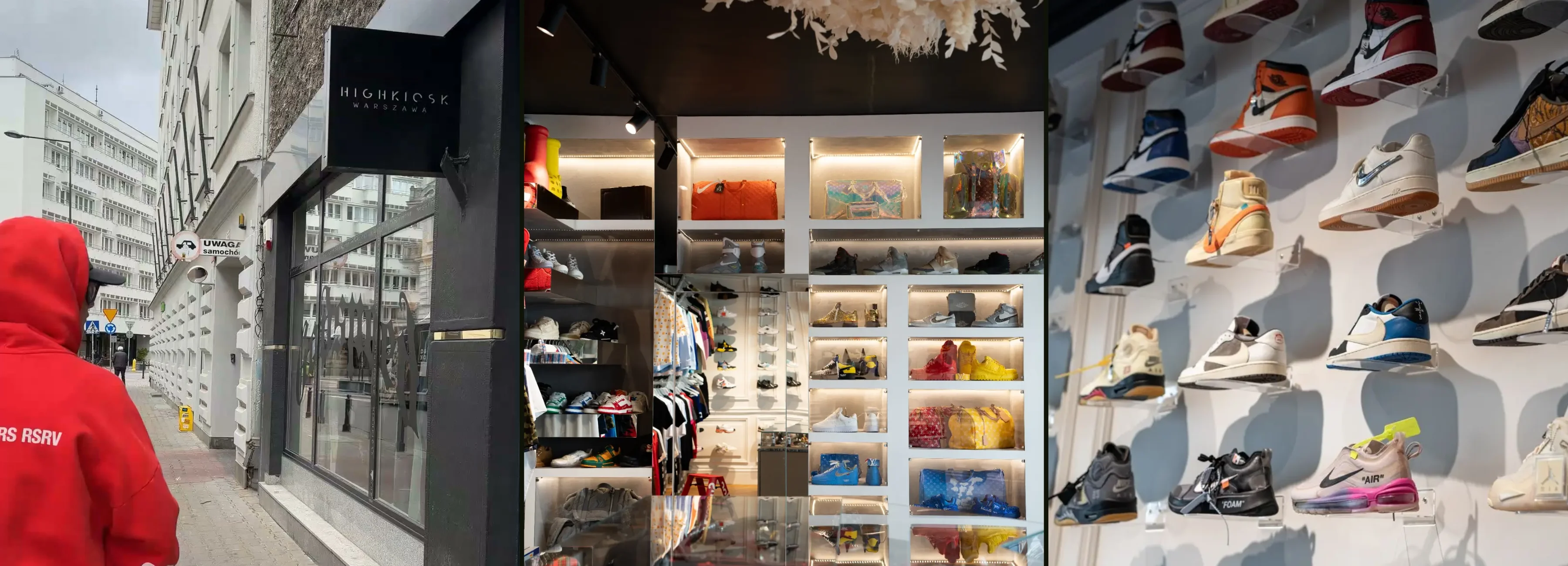
High Kiosk stocks sought-after streetwear and sneakers from brands like Godspeed and ThugClub. Demand for the product exists; the question is whether the store gets the sale or someone else does.
The brand’s earlier Meta campaigns returned well under 1x: for every złoty spent, less than half came back in sales. Paid media was a cost, not a sales channel.
Challenge
Crowded category
Shoppers can find the same brands in many stores. Ads have to reach people at the moment they are ready to buy, and give them a reason to buy here.
Challenge
A big, changing catalogue
Hundreds of products and constant new drops. Hand-built ads for each item don’t scale; the product feed has to do the work.
Challenge
No profitable baseline
Previous campaigns never broke even, so there was no proven structure to build on. We started from the ground up.
The objective
Three goals. One standard.
Make paid media profitable
Get every campaign above break-even on real purchase value, then grow from there.
Capture the demand that already exists
Be in front of people actively searching for these brands and products, on Google and in their feeds.
Turn drops into sales spikes
Use new arrivals and brand launches to drive repeatable peaks, not one-off luck.
The approach
Four systems. One engine.
Feed-first Google Shopping
The product feed became the campaign.
We rebuilt Google around a feed-only Performance Max campaign, so every product in the catalogue can show to shoppers searching for it, with bidding optimised to conversion value rather than clicks. That campaign alone has returned close to 4x.
Before
- Loss-making social-only ads
- Products advertised one by one
- Optimised for clicks
After
- Feed-driven Shopping on Google
- Whole catalogue working at once
- Optimised for purchase value
Brand search protection
People searching for High Kiosk by name should land on High Kiosk.
A dedicated brand search campaign keeps the store at the top for its own name, at a low cost, so competitors and marketplaces can’t take those buyers.
Meta for drops and discovery
We relaunched Meta in September on a clean ad account.
Brand-drop ads (“Godspeed now at High Kiosk”) build excitement around new arrivals, while dynamic catalogue ads follow up with the exact products people viewed.
Store optimisation
Better ads only pay off if the store converts.
Alongside the campaigns, we worked on the website itself so more of the traffic we pay for turns into orders.
The results
The curve that tells the story
Before Kliks, High Kiosk’s ads returned about 0.4x. From May 2026, Google Shopping took the account above break-even straight away and reached 5x in June. With Meta relaunched alongside Google in September, blended ROAS peaked at 7.3x.
From May to September, blended ROAS averaged 4.7x, monthly paid revenue grew 284% and cost per purchase fell 77% against the brand’s earlier campaigns. October is in progress: budget is going into new drops while the new Meta account finishes learning.
ROAS is shown as a ratio: purchase value reported by Google Ads and Meta, divided by spend. Revenue and spend figures are confidential. Ads were paused in August. Figures cover May–September 2026; October is still in progress.
ROAS trajectory
May → Sep 2026, blended across Google & Meta (Aug paused)
Monthly blended ROASBreak-even: 1.0xPeak: Sep, 7.3x
Before Kliks
0.4x
Meta ROAS, earlier campaigns
- Cost per purchaseIndex 100
- ChannelsMeta only
- Catalogue coverageA few products
- ProfitabilityBelow break-even
With Kliks
4.7x
Blended ROAS, May–Sep 2026, peak 7.3x
- Cost per purchaseIndex 23 (−77%)
- ChannelsGoogle + Meta
- Catalogue coverageFull product feed
- ProfitabilityAbove break-even
Revenue trajectory (indexed, May = 100)
Relative growth shape. Absolute figures confidential.
Index relative to May 2026 paid-channel revenue (Google Ads + Meta). August omitted: ads paused. October still in progress.
The build
Month by month, how it ramped
- BeforeROAS ~0.4x
Starting point
Earlier Meta campaigns lost money. No profitable structure to build on.
- May–JulROAS 2.1–5.0x
Google foundations
Feed-only Performance Max launched. Profitable from the first month, 5x in June.
- AugPaused
Reset
Ads paused while we prepared a clean Meta account and the next round of drops.
- SepROAS 7.3x, peak
Google + Meta together
Meta relaunched for brand drops and catalogue retargeting on top of Google Shopping. Best month so far.
- Oct–nowScaling
Scaling into new drops
More budget into new drops while the new Meta account finishes learning. Brand search protection added ahead of peak season.
What makes this different
Not just ads. A sales system.
Most agencies focus on
- Boosting posts and hoping for sales
- Hand-picking a few products to advertise
- Optimising for clicks and reach
- Treating each channel separately
- Reporting platform vanity metrics
This engagement focused on
- Letting the product feed do the work
- Advertising the whole catalogue at once
- Bidding on purchase value
- Google for intent, Meta for drops
- Real purchase economics: CPP, ROAS
Key impact
What actually changed
From loss to profit
Paid media went from returning under half its cost to a 4.7x blended return, with a 7.3x peak.
A whole-catalogue engine
Feed-driven Shopping puts every product in front of ready-to-buy searchers without building ads one by one.
Drops that sell
New arrivals now have a paid launch playbook on Meta, backed by catalogue retargeting.
Cheaper customers
Cost per purchase fell 77% compared with the brand’s earlier campaigns, while paid revenue grew 284%.
Conclusion
From paid cost to paid sales channel
High Kiosk had products people want. What it lacked was a paid setup that put those products in front of buyers at the right moment and judged success on purchase value.
Feed-first Google Shopping fixed the base, Meta added launch power for new drops, and clear scale/cut rules keep the budget where it earns.
The system was built on
- Feed-first Shopping
- Brand defence
- Drop-led social
- Data-first decisions
- Not guesswork.
Want your product feed working as hard as your best salesperson?
We review your current setup, identify where you’re losing revenue, and tell you exactly how we’d fix it. No pitch deck. No fluff. Just straight talk about your numbers.
What to expect
- We review your current setup
- We identify where you’re losing revenue
- We tell you exactly how we’d fix it
Limited spots per quarter. We respond within 24 hours.